The photographers who stay fully booked are not always the most talented in their market. They are the most organized. They have a clear process for every stage of the client relationship and they execute it the same way, every single time.
That consistency does two things. It makes clients feel taken care of, which generates referrals. And it removes the chaos of running a creative business without a system, which prevents burnout.
Here is the exact workflow that top photographers use, from the moment an inquiry lands to the moment the gallery is delivered.
The Complete Client Workflow
Inquiry
The Inquiry Comes In
A potential client fills out your contact form, reaches out through a booking platform, or messages you directly. This is the starting point of every client relationship. The moment it lands, it should automatically appear in your pipeline so nothing gets lost in your inbox or forgotten in a notification. Every inquiry deserves a record from day one.
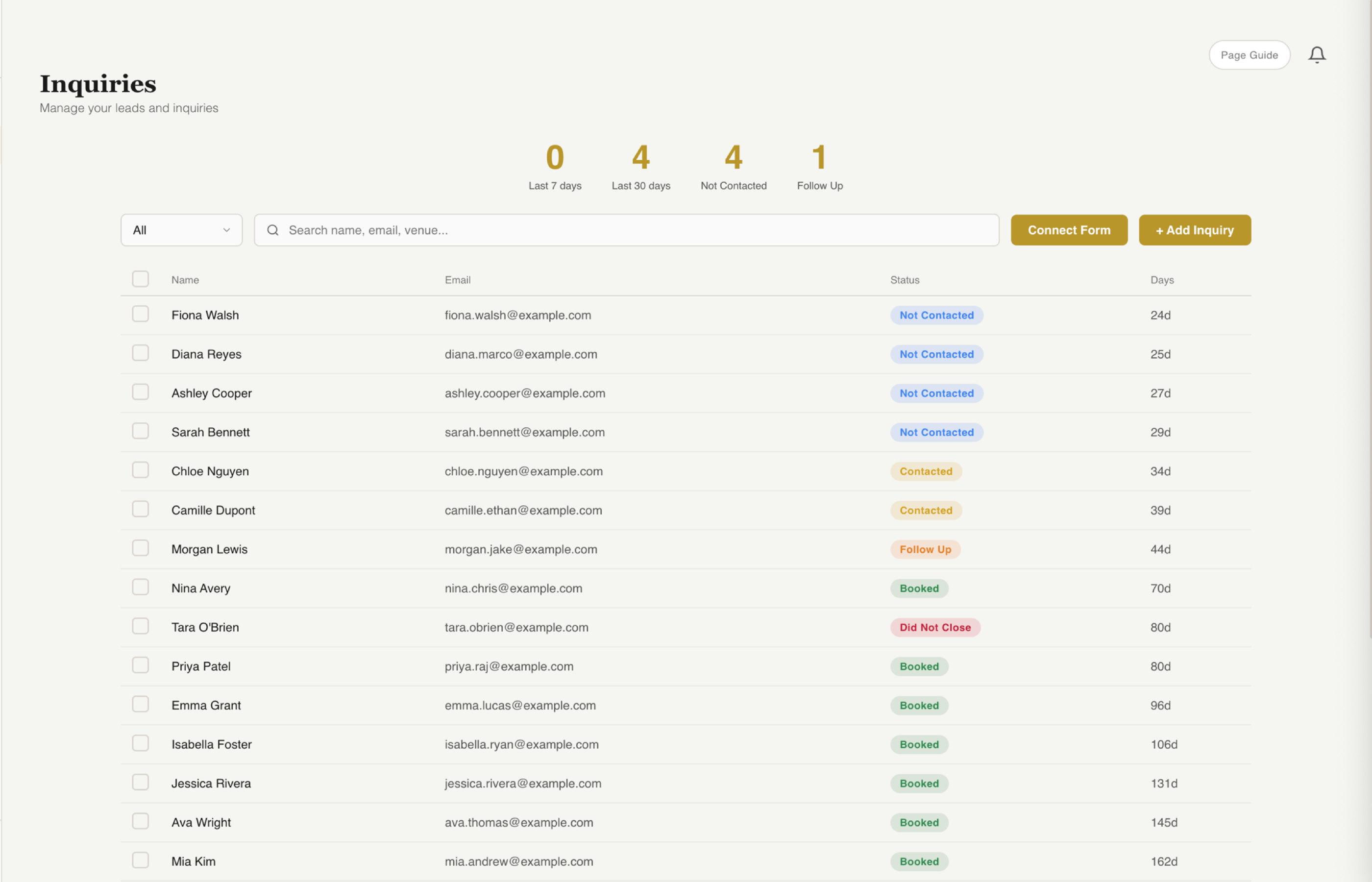
See how fstop's inquiry pipeline works →
Response
Respond Fast and Respond Well
Response time is one of the most important factors in whether you book a client. Couples and clients reaching out are often contacting multiple photographers at the same time. The first one to reply with a warm, professional message has a real advantage. Your goal is to respond within the hour, every time. Not with a generic auto-reply, but with a real message that acknowledges their details and moves the conversation forward. Pre-written templates that you can personalize in seconds are how you do this at scale without sacrificing quality.
Follow Up
Follow Up If They Go Quiet
If a client does not respond within two to three days, follow up. Not aggressively, just a short, friendly check-in. Most photographers never do this and leave a significant number of potential bookings on the table. Clients go quiet for all sorts of reasons that have nothing to do with losing interest. A timely follow-up puts you back in front of them before they move on. Your pipeline should flag leads that have gone silent so you always know who needs a nudge and when.
Consultation
Consultation or Discovery Call
Before you send pricing, get on a call. Even a fifteen-minute conversation lets you understand what the client actually wants, demonstrate your personality and expertise, and tailor your proposal to their specific situation. It also filters out clients who are not serious. Take notes. Store them in the client profile so when you follow up, your message reflects the details of their specific day, not a generic pitch.
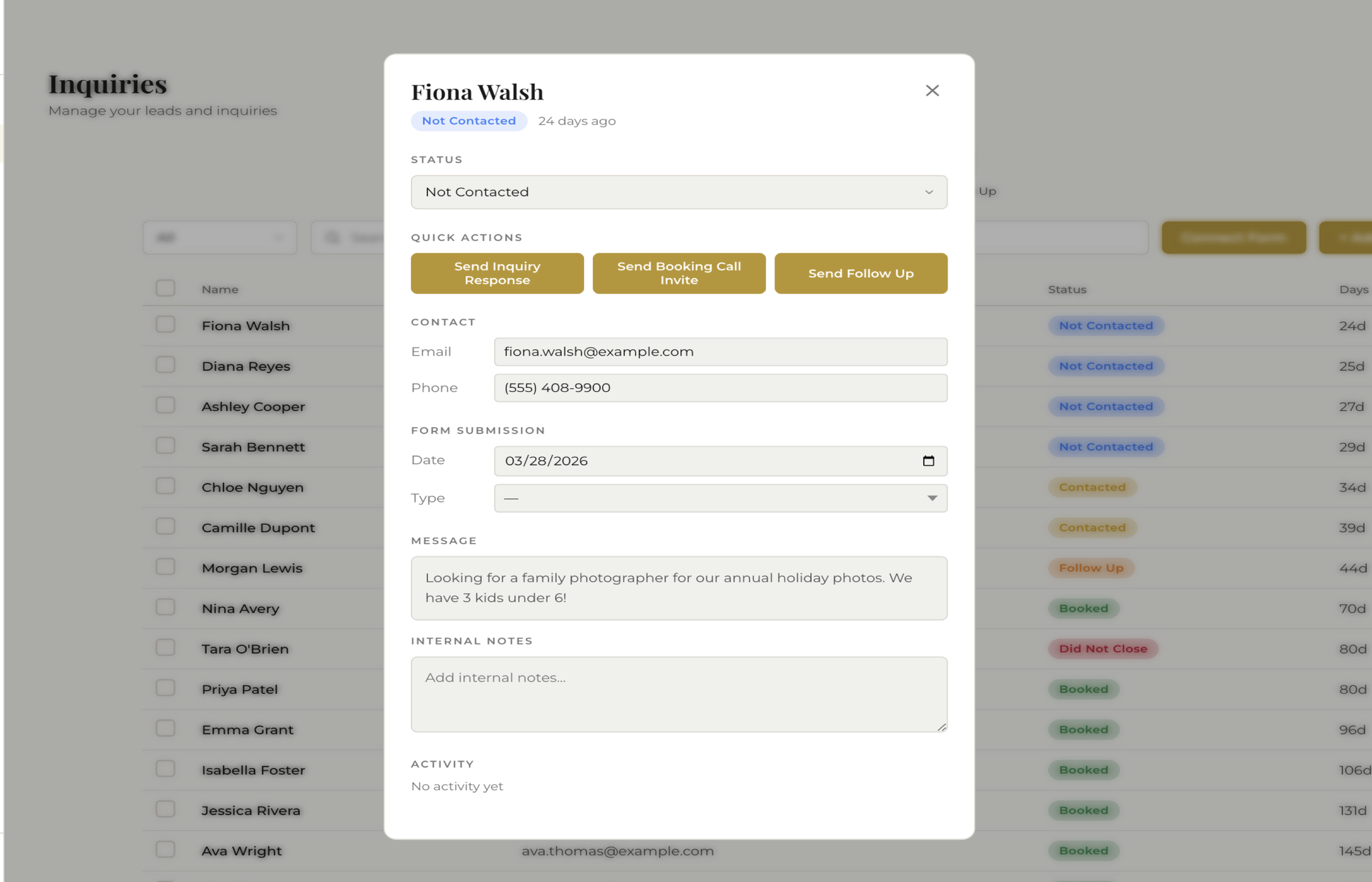
See how fstop's lead details work →
Contract
Send the Contract
Once a client is ready to move forward, the contract goes out immediately. Not after another email exchange. Not tomorrow. Right away. A signed contract is what officially starts the professional relationship. It protects you, protects the client, and signals that you run a real business. Send it digitally so they can review and sign from any device. The easier you make it to sign, the faster it comes back.
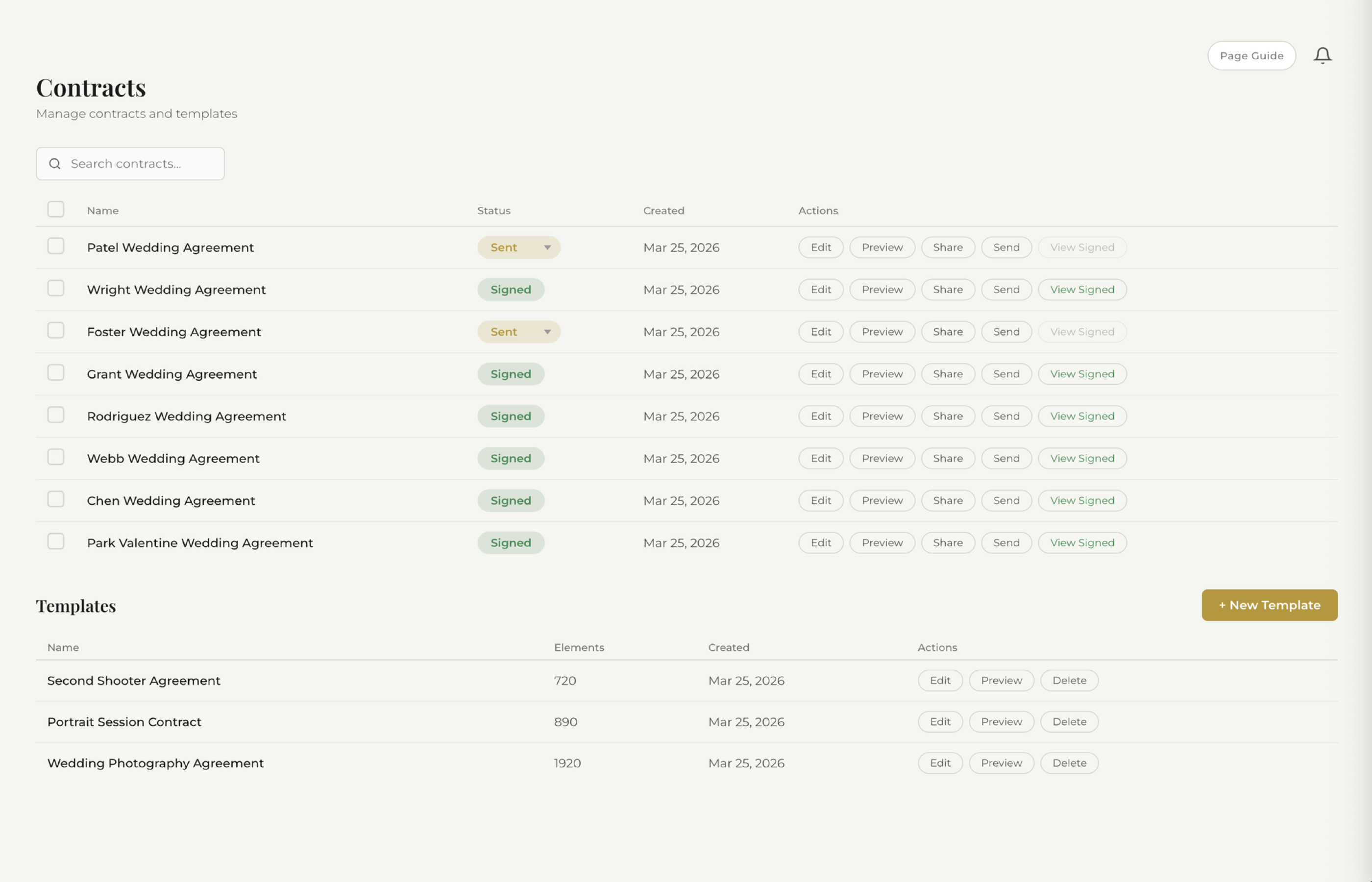
See how fstop's contract system works →
Deposit
Collect the Deposit
Send the invoice alongside the contract or immediately after it is signed. The deposit is what holds the date. Make this clear to the client and make it easy to pay. A booking is not real until money has changed hands. This also tells you quickly who is genuinely committed and who was just shopping around.
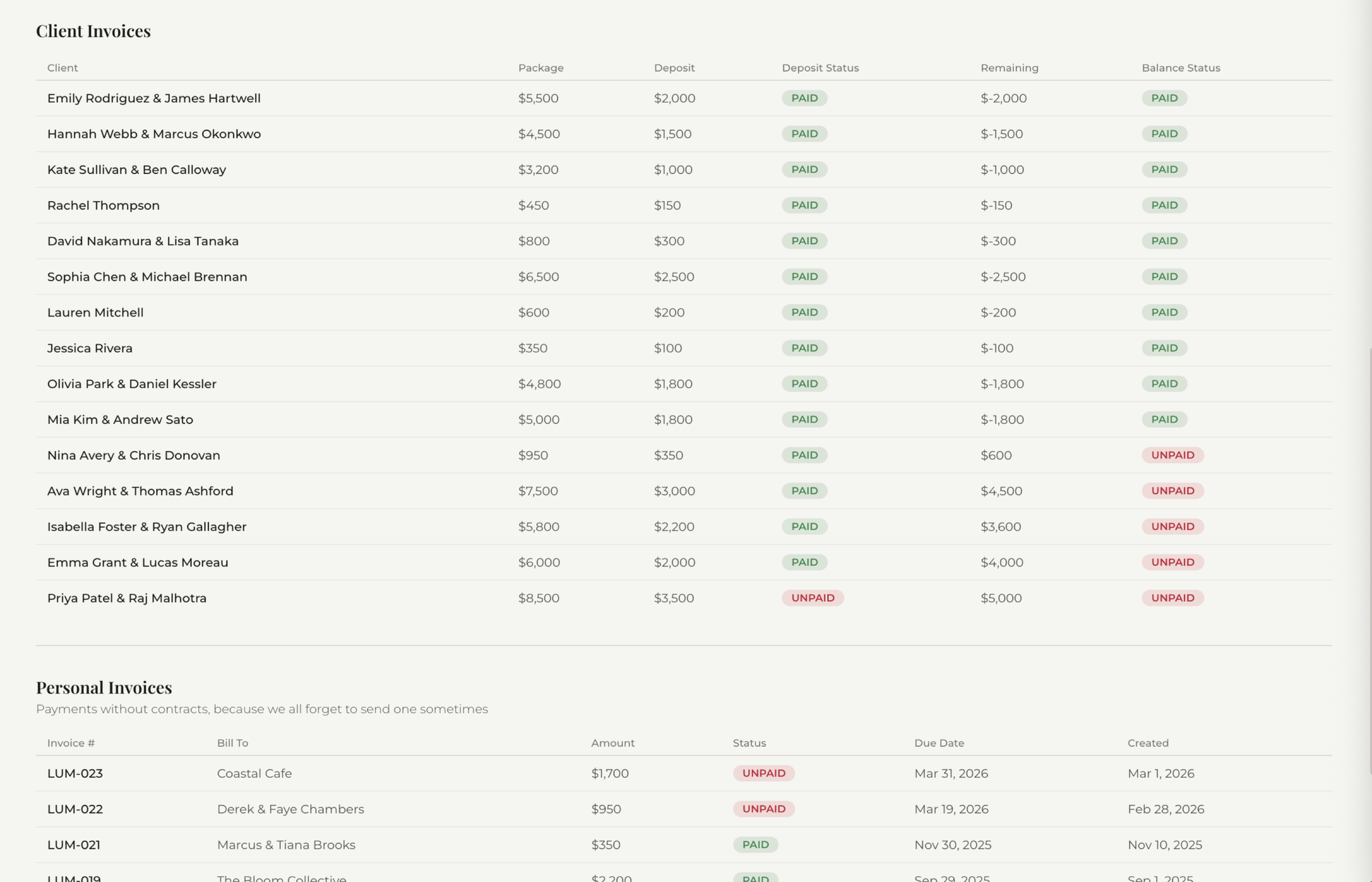
See how fstop's invoicing works →
Pre-Shoot
Questionnaire and Timeline
Two to three weeks before the shoot, send your questionnaire and work with the client to build the day's timeline. This is where you collect the details that make the shoot run smoothly: shot list, vendor contacts, arrival times, locations, family groupings, and any special moments they want captured. A well-built timeline is the difference between a chaotic shoot and one that flows. It also shows clients that you are prepared and professional before they ever see you pick up a camera.
Team
Share Info With Your Team
If you are working with a second shooter, videographer, or assistant, make sure they have everything they need before the day arrives. The timeline, the shot list, the vendor contacts, the client's preferences. Everyone on your team should show up knowing exactly what is expected. Sharing a complete brief with your team is a sign of a mature operation, and it protects you when things move fast on the day.
Client Portal
Send the Client Portal
Give clients a single place to see everything related to their booking: the signed contract, the invoice, the timeline, any documents you have shared. A client portal eliminates the back-and-forth of "can you resend that contract?" and makes you look like a polished, organized professional. It also reduces day-of anxiety for clients who feel like everything is in order because it is.
Shoot Day
Shoot Day
You have done the work. The timeline is set, the team is briefed, the client knows what to expect. Now you show up and do what you do best. The groundwork you laid in every step before this moment is what lets you be fully present on the day, focused on capturing great images instead of managing logistics on the fly.
Delivery
Gallery Delivery and the Ask
Deliver the gallery with a personal note that references something specific from their shoot. Not a form email. Two genuine sentences that remind them you were paying attention. Clients are at peak happiness the moment their gallery arrives. That is when you ask for a review and a referral. Most photographers never ask, and they leave both on the table. One well-timed ask at delivery can generate more new business than months of marketing.
Why This Only Works With a System Behind It
Reading through that workflow, every step makes sense. The challenge is not knowing what to do. The challenge is executing it consistently across every client, every booking, every season, while you are also editing, shooting, and managing a business.
That is what a CRM is for. Not to replace your judgment or your personality, but to make sure nothing slips. Every inquiry is captured. Every stage is tracked. Templates make every response fast and polished. Follow-ups get triggered automatically. The client portal keeps everyone on the same page. And when you are on the way to a shoot, you are not scrambling to remember which clients have paid and which ones still need the questionnaire.
The compounding effect: A consistent client process does not just protect you from mistakes. It actively builds your reputation. Clients who feel organized, informed, and well cared for refer their friends. One great process, repeated across every client, becomes a referral engine over time.
Fstop was built to make this entire workflow feel effortless. Inquiries flow into your pipeline automatically. Templates let you respond in minutes. Contracts go out with one click. The client portal gives your clients a polished, professional experience. And your pipeline shows you exactly where every client stands so nothing ever falls through.
Build the process once. Let the system run it. That is how fully booked actually works.
Run your full client workflow in Fstop.
Pipeline, templates, contracts, invoices, questionnaires, and client portal: everything in one place, built for photographers.
Start Your Trial