At some point in every photographer's career, you realize you can't be in two places at once. The groom is getting ready upstairs, the bride is having her veil pinned downstairs, and cocktail hour starts in 40 minutes. You need a second shooter — not as a luxury, but as a necessity.
Hiring a second shooter well means finding the right person, paying them fairly, protecting yourself with a contract, and managing the relationship so it works smoothly for every booking. This guide covers all of it.
When You Actually Need a Second Shooter
Not every job requires a second camera. But some absolutely do. Here are the clearest signs:
- 150+ guests. Once you pass 150 people, you physically cannot capture every table, every reaction, every candid moment alone. A second shooter gives you coverage of the room while you stay with the couple.
- Multiple locations. If the getting-ready locations are at different addresses — or if the ceremony and reception are at separate venues — you need someone at the other spot. Otherwise you're burning golden-hour time sitting in traffic.
- 10+ hour days. Weddings that run from hair and makeup at 9am through a midnight sparkler exit are marathons. Your creativity and sharpness decline after hour eight. A second shooter keeps the quality consistent across the full day.
- Large bridal parties. When there are 10 groomsmen and 12 bridesmaids, group formals take forever with one photographer. Two cameras cut that time in half, and your couple will thank you for it.
- Premium packages. If your top-tier package promises "two photographers," you need a reliable second shooter on call. This is a revenue opportunity, not just a cost — many photographers charge $500-1,000 more for dual coverage and pay their second shooter $400-800.
The flip side: engagement sessions, small elopements, headshots, and mini sessions usually don't need a second. Save your budget for the days where a second camera genuinely changes the outcome.
How to Find Good Second Shooters
The best second shooters are often photographers building their own businesses who want extra income, portfolio images, or experience at larger weddings. Here's where to find them:
Facebook Groups
Search for "[your city] wedding photographers" or "[your state] photography networking" groups. Most have regular posts from photographers looking for second shooting work. You can also post your own callout describing the job, date, and rate. Be specific — vague posts attract vague applicants.
Professional Associations
Local PPA (Professional Photographers of America) chapters, WPPI communities, and regional photography associations maintain member directories. These photographers tend to be more experienced and carry their own insurance — both significant advantages.
Search location tags and local photography hashtags. When you find someone whose work you like, DM them directly. This is actually one of the best methods because you can see their editing style, composition, and consistency before reaching out. Look at their stories and recent work, not just their highlight reel.
Word of Mouth
Ask other photographers in your area who they use. The photography community is smaller than you think, and a recommendation from a colleague you trust is worth more than any portfolio. If a photographer you respect says "this person shows up on time, delivers clean files, and doesn't complain," that's the hire.
When evaluating candidates, look at full gallery sets — not just their portfolio picks. You want to see how they handle reception lighting, family formals under time pressure, and the unglamorous but essential moments. Ask for references from lead photographers they've worked with before.
What to Pay a Second Shooter
Rates vary by market, but here are the standard ranges in 2026:
- Hourly rate: $50-75/hour is the standard range for experienced second shooters. Newer photographers or those building their portfolio may accept $35-50/hour, but you get what you pay for.
- Day rate: $400-800/day is typical for an 8-10 hour wedding day. This is usually more cost-effective than hourly for full-day coverage and gives both parties clarity upfront.
- Half-day rate: $200-400 for 4-5 hours of ceremony and portrait coverage only.
A few things to keep in mind on pricing:
- Pay fairly. Underpaying second shooters is a race to the bottom. The photographers willing to work for $25/hour at a wedding are rarely the ones you want representing your brand.
- Factor in travel. If the venue is 90 minutes from the city, consider adding a travel stipend or mileage reimbursement. Nobody wants to drive three hours round trip for free.
- Pay promptly. Net-7 or net-14 at the latest. Photographers talk, and being known as someone who pays late will dry up your talent pool fast.
Second Shooter Contract Essentials
This is where most photographers get it wrong. They find a second shooter, agree on a rate over DM, shake hands at the venue, and call it done. Then three months later, the second shooter posts the couple's images on their website with their own watermark and the lead photographer has no legal ground to stand on.
Always use a contract with second shooters. Verbal agreements fall apart when there's a dispute about image usage.
Your second shooter contract should cover these essentials:
Deliverables
Spell out exactly what you expect. How many hours of coverage? Which parts of the day (getting ready, ceremony, reception, or all of it)? Are they responsible for delivering edited images or just RAW files? Most lead photographers want unedited RAW files delivered within 5-7 business days so they can maintain a consistent editing style across the full gallery.
Image Rights and Usage Restrictions
This is the most important clause. In most second shooter arrangements, the lead photographer retains full copyright and ownership of all images. The second shooter is working as an independent contractor producing work under your direction. Be explicit about:
- Whether the second shooter can use images in their portfolio (most leads allow this with credit)
- Whether they can post on social media (and if so, whether they must tag/credit the lead)
- Whether they can use images for paid advertising or contest submissions
- Whether they can share images directly with the couple or guests (typically no)
Payment Terms
State the rate, payment method, and timeline clearly. Many photographers pay 50% upfront as a booking retainer and the remaining 50% on the wedding day or within 7 days after. Include what happens if the wedding cancels — does the retainer stay with you, or is it refundable?
Cancellation Policy
Life happens. Define what constitutes acceptable cancellation from either side, how much notice is required (14-30 days is standard), and whether any fees apply. If the second shooter cancels within 48 hours, you need time to find a replacement — your contract should reflect that urgency.
Equipment Requirements
Specify the minimum gear they need to bring: two camera bodies (backup is non-negotiable at weddings), appropriate lenses, flash, and sufficient memory cards. Some leads also require the second shooter to carry their own liability insurance.
Dress Code and Conduct
It sounds minor until your second shooter shows up in jeans and sneakers at a black-tie wedding. Specify "business casual all black" or whatever matches the event. Also note expectations around conduct: no drinking, no personal phone use during the event, and professional interaction with guests at all times.
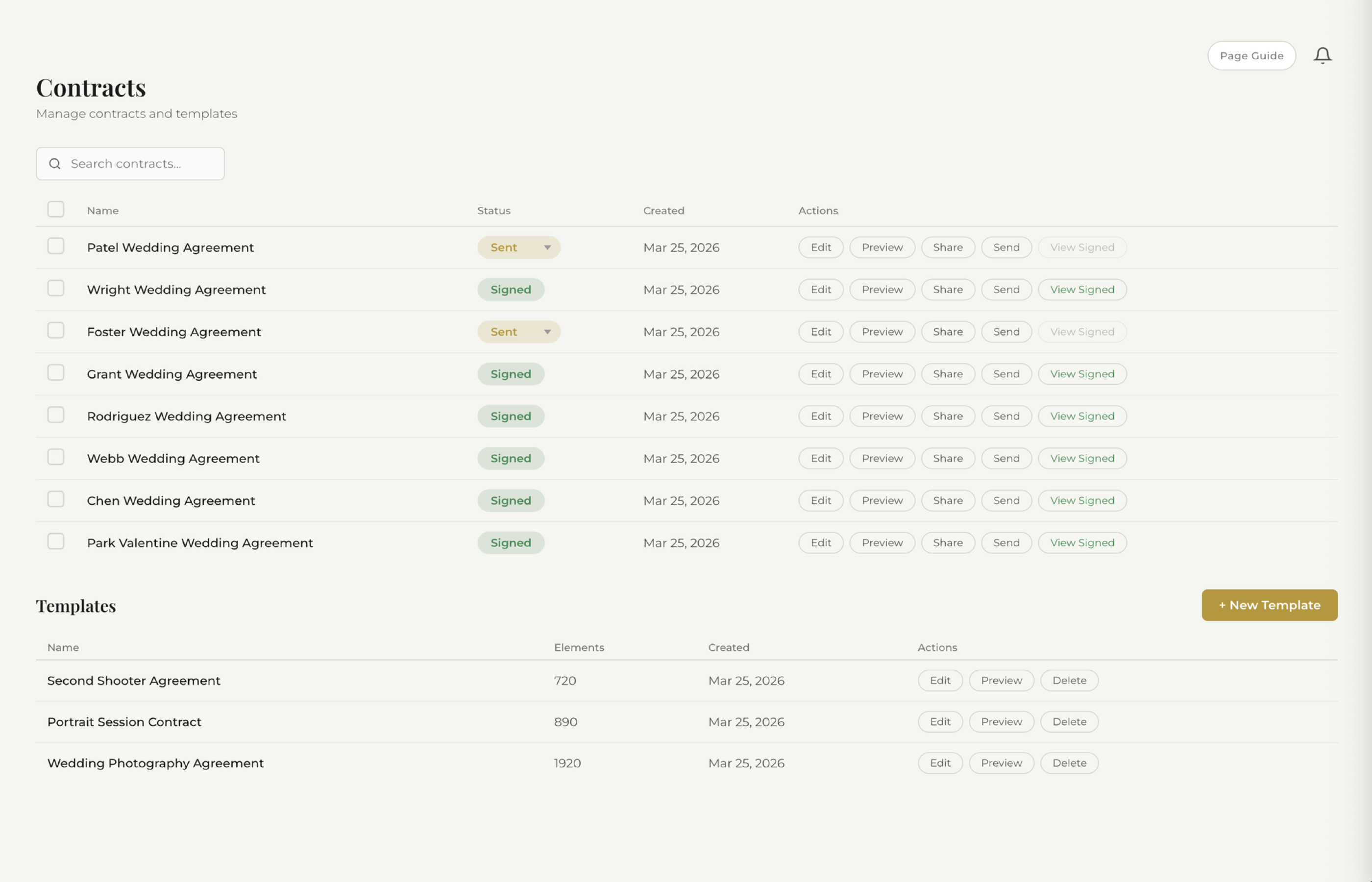
Create second shooter contracts in fstop →
Briefing and Prep Before the Wedding Day
A second shooter is only as good as their briefing. The best second shooters in the world will underperform if you hand them a camera and say "just get some candids." Preparation is your responsibility as the lead.
Share the Timeline
Send the full day-of timeline at least a week before the wedding. Your second shooter needs to know when getting ready starts, when the first look is, how long formals will take, when sunset is, and when the reception transitions happen. If there are specific moments the couple cares about — grandfather's toast, surprise choreographed dance — flag them.
Define Shot List Priorities
You don't need to micromanage every frame, but be clear about responsibilities. A common split: the lead stays with the bride and covers ceremony from the front, while the second shooter covers the groom's prep and shoots the ceremony from the back or balcony. During the reception, one stays on the dance floor while the other roams for candids and detail shots.
If there are VIP guests the couple specifically mentioned — a grandmother who traveled internationally, a best friend who hasn't been seen in years — point them out early.
Align on Editing Style
If you want RAW files delivered unedited (which is the most common arrangement), let your second shooter know your editing style so they can expose and compose in a way that works with your post-processing. Share a few recent gallery links. If you shoot bright and airy, a second shooter who exposes dark and moody will create extra work in post.
Communication on the Day
Exchange phone numbers. Agree on a simple system — a quick text when you're moving to a new location, a heads-up when formal groupings are starting. Some photographer pairs use walkie-talkies at large venues. Whatever method you choose, establish it before the wedding, not during.
Managing Second Shooters in Your CRM
Once you're regularly hiring second shooters, you need a system to track who's assigned to which wedding, what they're being paid, and whether they've delivered their files. Spreadsheets work until they don't — and they stop working fast once you're booking 20+ weddings a year with different second shooters on different days.
In Fstop CRM, you can assign team members directly to a client's job. This keeps the second shooter's name, rate, and payment status tied to the specific wedding rather than floating in a separate spreadsheet or buried in an email thread.
- Assign to client: Add your second shooter to the wedding so you can see at a glance who's covering which date.
- Track payments: Log what you owe and what's been paid. When tax season arrives, you'll have a clean record of every contractor payment without digging through Venmo receipts.
- Centralize communication: Notes, shot list details, and timeline links all live on the client record where both you and your team can access them.
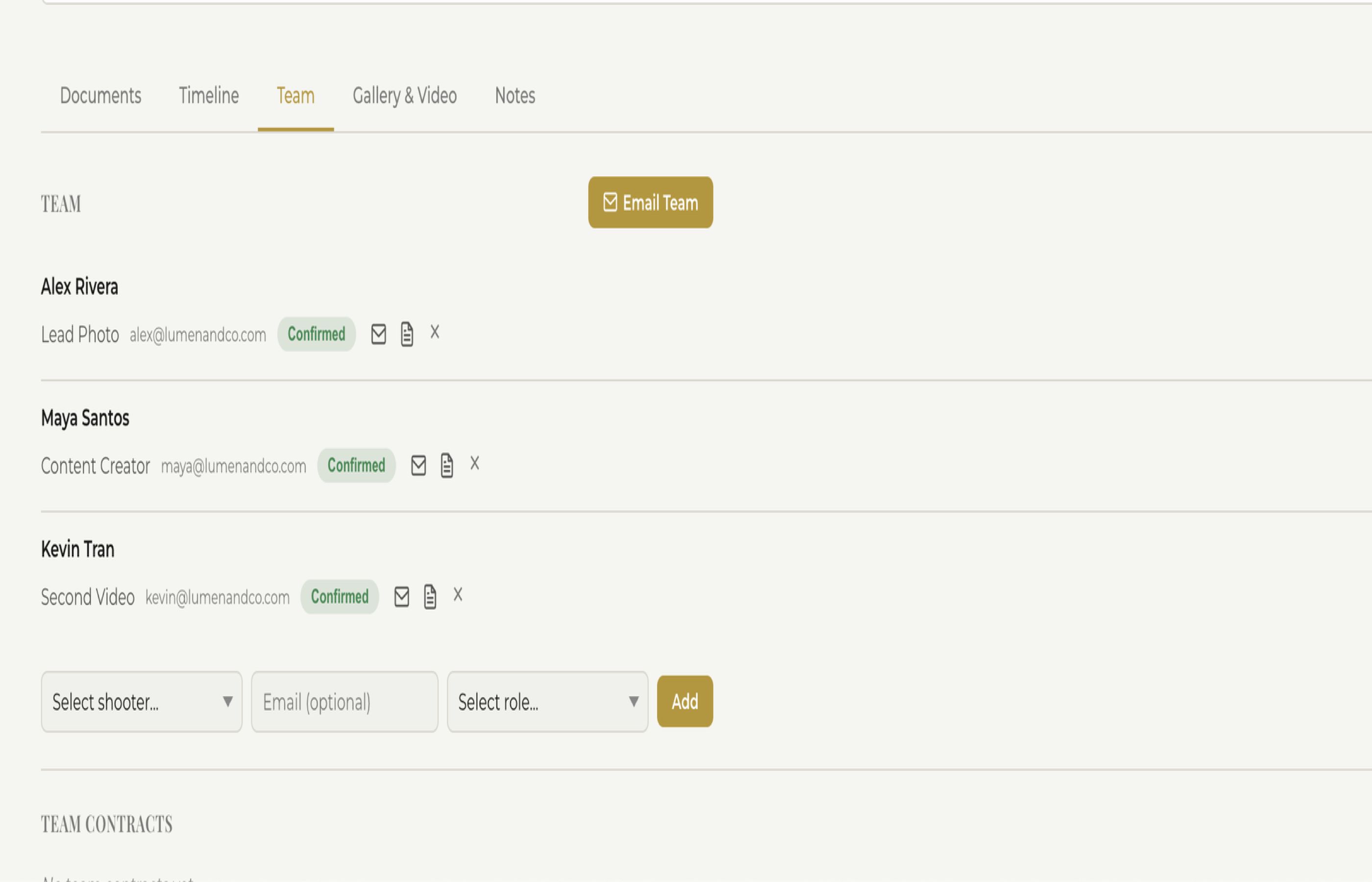
See how fstop manages team assignments →
Building a Reliable Roster
The goal isn't to find one great second shooter. It's to build a roster of three to five people you trust, so you always have someone available regardless of scheduling conflicts.
Here's how to build that roster over time:
- Start with test runs. Before booking someone for a $10,000 wedding, hire them for a smaller event — a corporate headshot day, a family session, or a less high-pressure wedding. See how they handle real conditions before the stakes are high.
- Give honest feedback. After every event, do a quick debrief. Tell them what worked and what didn't. Second shooters who are building their own business will appreciate the mentorship, and you'll get better work next time.
- Be loyal both ways. If a second shooter consistently delivers great work, keep hiring them. Offer them first right of refusal on your calendar. Reliability is rare — when you find it, lock it in.
- Keep records. Track who shot what, their rates, and any notes on performance. Over time, you'll know exactly who to call for a 300-person Indian wedding versus a 50-person backyard elopement. Different events call for different strengths.
- Pay well and pay fast. This is the single most effective retention strategy. Photographers who pay $75/hour and send payment within 48 hours never struggle to find second shooters. Photographers who negotiate every rate down and pay net-60 are always scrambling.
A strong second shooter roster is a competitive advantage that takes years to build and seconds to lose. Treat your second shooters the way you'd want to be treated if the roles were reversed — because early in your career, they probably were.
Try Fstop for 7 Days
Manage your second shooters, contracts, and payments in one place. Plans from $19.99/mo. No contracts, no watermarks, no fluff.
START YOUR TRIAL