HoneyBook is everywhere. It's well-funded, heavily marketed, and the go-to recommendation in every Facebook group and YouTube tutorial about running a photography business. And for a certain type of creative business — event planners, graphic designers, generalist freelancers — it works fine.
But if you're a photographer, you're probably discovering something: HoneyBook was built for everyone, which means it was built for no one in particular. It doesn't understand your workflow. It doesn't know what a gallery delivery is. It doesn't think about the gap between a signed contract and a wedding day. And increasingly, it doesn't fit your budget either.
In 2026, HoneyBook's Essentials plan starts at $29/month — and if you want automation, Essentials is $49/month billed yearly, with Premium at $109. For a solo photographer, that's a real line item. Especially when you're already paying for editing software, gallery hosting, album design tools, and everything else that goes into running this business.
So if you're searching for a HoneyBook alternative for photographers, you're not alone — and you're asking the right question.
Why Photographers Are Leaving HoneyBook
The frustration isn't usually one big thing. It's a slow accumulation of "why is this so complicated?" moments. Here's what photographers tell us most often:
- The pricing jumped. HoneyBook increased prices significantly and moved the most useful features behind higher tiers. What felt manageable at $16/month now costs $29–$109/month depending on what you actually need.
- It's built for generalists. The interface, templates, and pipeline logic were designed for a broad range of service businesses. Photographers have specific workflows — inquiry, contract, invoice, session, gallery delivery — and HoneyBook doesn't reflect that naturally.
- Branding limitations. On lower tiers, HoneyBook adds its own branding to your client-facing documents. Your client sees "Powered by HoneyBook" on contracts and invoices — not exactly the premium experience most photographers are trying to create.
- Learning curve for what you actually use. HoneyBook has a lot of features. But most photographers use maybe 20% of them — and the other 80% creates clutter and confusion.
The core issue: HoneyBook is a horizontal tool in a vertical world. Photography is a specific craft with specific business needs. A tool designed for every creative will always be a compromise for any one of them.
What a Real HoneyBook Alternative Looks Like
Before we get to the comparison, it's worth being clear about what you actually need from a CRM as a photographer. The core jobs are straightforward:
- Track incoming inquiries so nothing falls through the cracks
- Send professional, branded proposals and contracts
- Collect signatures and payments
- Follow up with leads automatically or with one click
- Move clients through a clear pipeline from inquiry to delivered gallery
That's it. You don't need a project management suite. You don't need a social media scheduler. You need a system that understands how a photography business actually runs — and gets out of your way so you can shoot.
Fstop CRM: Built by a Photographer, for Photographers
Fstop CRM was built specifically for photographers and videographers. Not adapted. Not pivoted. Built from scratch with a single type of business in mind — which means the pipeline stages, the templates, the workflow logic, all of it reflects how photography businesses actually operate.
The pricing is also radically different: plans start at $19.99/mo billed yearly ($21.99/mo billed monthly). Every CRM feature is on every plan. No per-user fees, no feature gates inside the CRM, no annual commitment required. The only thing the higher tiers add is client photo gallery storage.
Updated August 2026: since this post was first published, fstop has shipped the three things HoneyBook users ask about most. Clients now pay invoices by card through your own connected Stripe account, and fstop takes no cut. The iOS app is live on the App Store with real-time sync and push notifications. And there's now a free concierge migration: book a call and we'll load your HoneyBook export or client spreadsheet with you, live on a screen share.
Fstop vs. HoneyBook: Head-to-Head Comparison
| Feature | Fstop CRM | HoneyBook |
|---|---|---|
| Monthly price | From $19.99/mo | $29 – $109/mo |
| Annual commitment required | ✓ No — pay monthly | ✗ Save only with annual plan |
| Built specifically for photographers | ✓ Yes | ✗ General creative businesses |
| Photographer-specific pipeline stages | ✓ Yes | ✗ Generic stages |
| No watermark / branding on client docs | ✓ Included at all plans | ✗ Requires higher tier |
| Contracts & e-signatures | ✓ Yes | ✓ Yes |
| Invoicing & online payments | ✓ Yes | ✓ Yes |
| Lead pipeline & tracking | ✓ Yes | ✓ Yes |
| Email templates & follow-ups | ✓ Yes | ✓ Yes (higher tiers) |
| Free trial | ✓ 7 days, cancel anytime | 7-day trial |
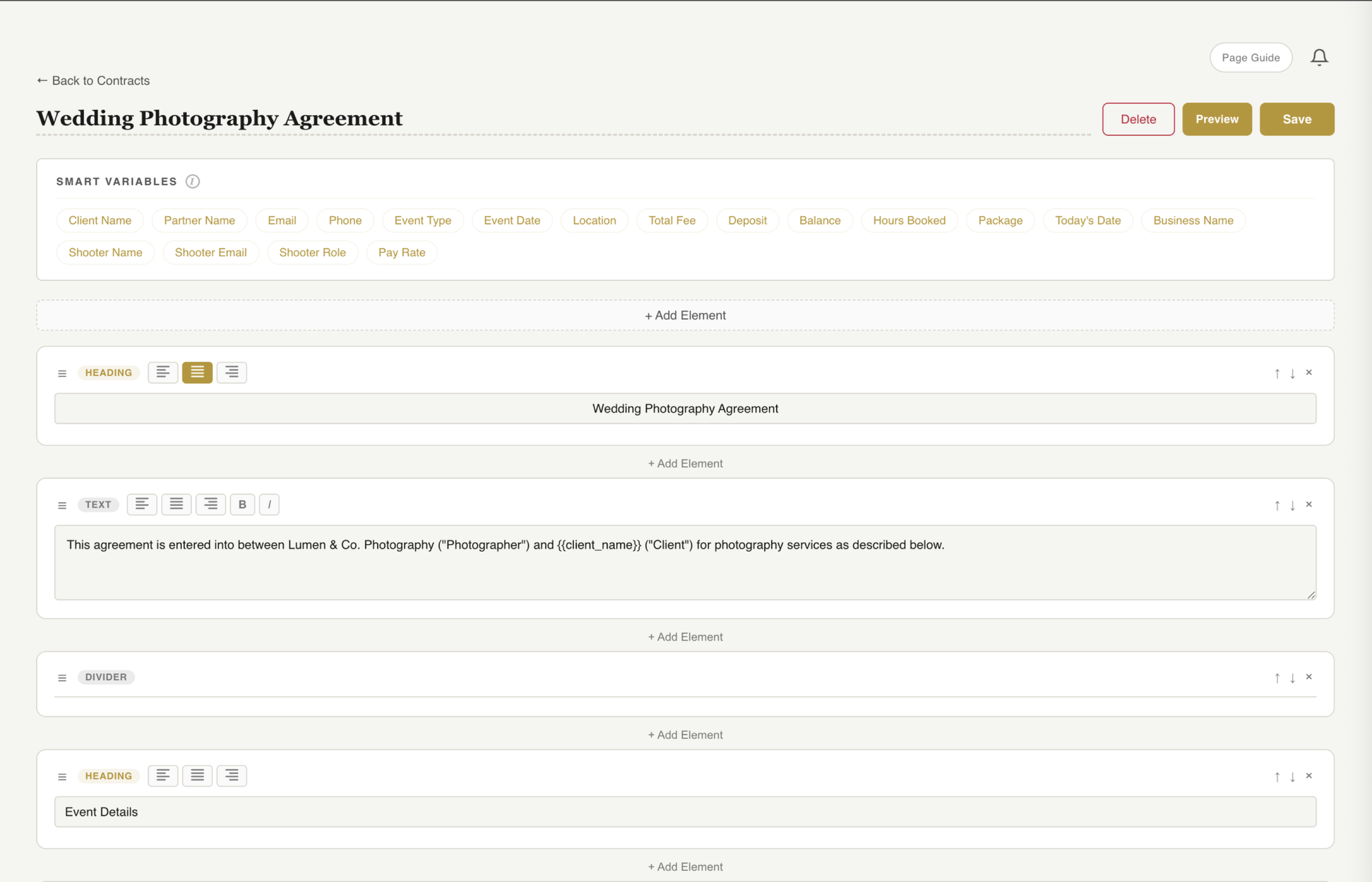
See how fstop's contract editor works →
HoneyBook Pros & Cons for Photographers
✓ Pros
- Established platform with a large community
- Polished UI and good mobile app
- Lots of tutorials and third-party resources
- Integrations with tools like Zapier and QuickBooks
- Good for multi-service creative businesses
✗ Cons
- Significantly more expensive ($29–$109/mo)
- Not built for photographers — generic workflows
- "Powered by HoneyBook" branding on lower tiers
- Feature bloat — many tools you'll never use
- Best features locked behind premium tier
Fstop CRM Pros & Cons
✓ Pros
- Plans from $19.99/mo, every CRM feature on every plan
- Client photo galleries built in on Studio and Pro plans (HoneyBook has no galleries at all)
- Built exclusively for photographers and videographers
- No watermarks or platform branding on any plan
- Photographer-first pipeline: inquiry → contract → invoice → gallery
- No annual commitment — cancel anytime
- 7-day free trial required
✗ Cons
- Newer platform — smaller community than HoneyBook
- Fewer third-party integrations currently
- Less name recognition (though that's changing fast)
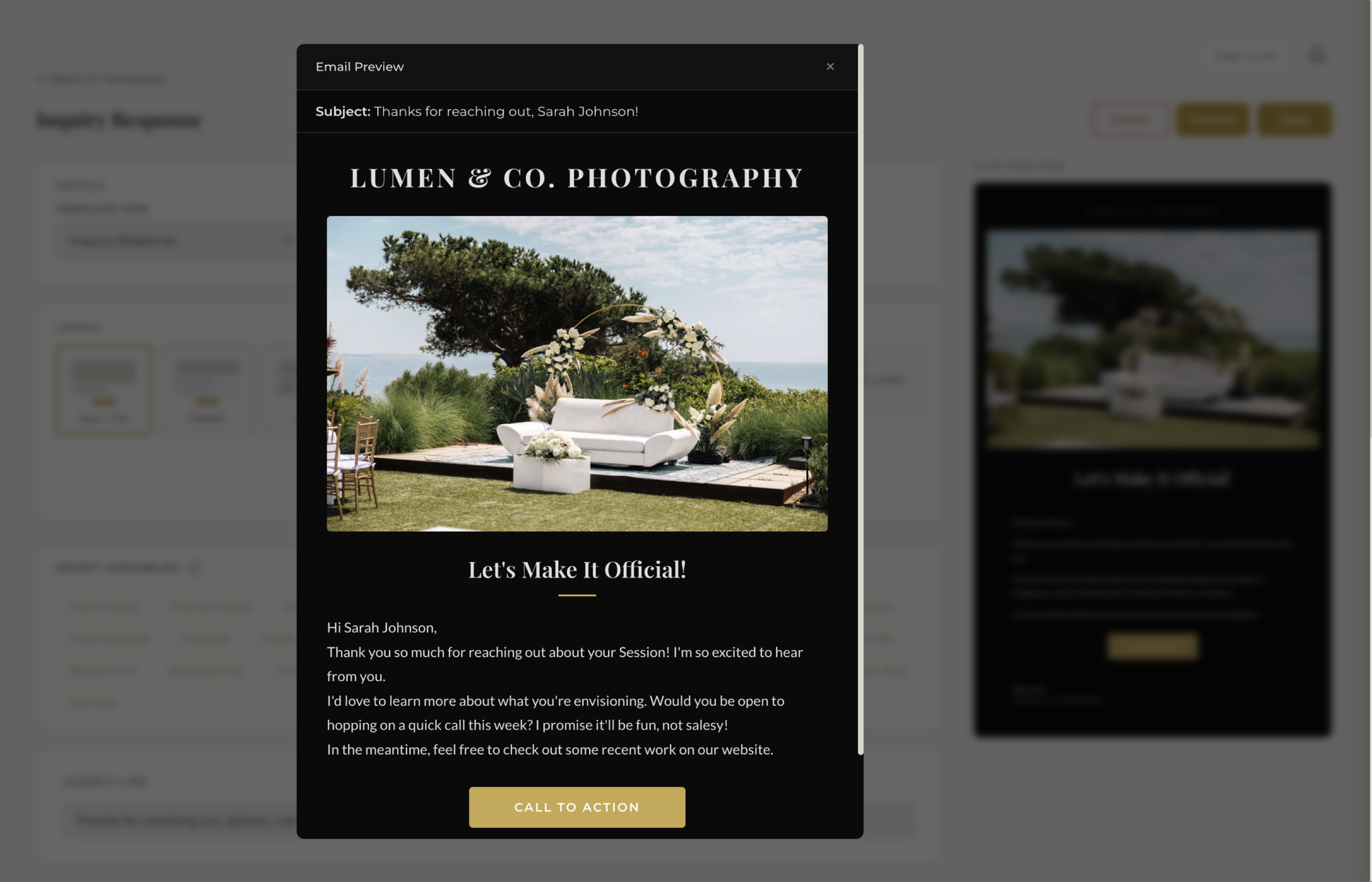
See how fstop's email templates work →
The Real Cost of Staying with HoneyBook
Let's be concrete. If you're on HoneyBook's most popular plan at $49/month billed yearly (the "Essentials" tier with automation), you're spending $588/year on CRM software. Fstop costs $263.88/year. That's over $680 back in your pocket every single year — money you could put toward a new lens, marketing, or simply keeping more of what you earn.
And that's before you consider the intangible cost: using a tool that wasn't designed for your business. Every time you have to work around HoneyBook's generic structure to fit your photography workflow, you're losing time. Time spent adapting a tool is time not spent shooting, editing, or building client relationships.
A CRM should feel like it was made for you. When you open your pipeline and see stages that reflect your actual business — not some generic freelancer template — you move faster, make better decisions, and spend less mental energy on administration.
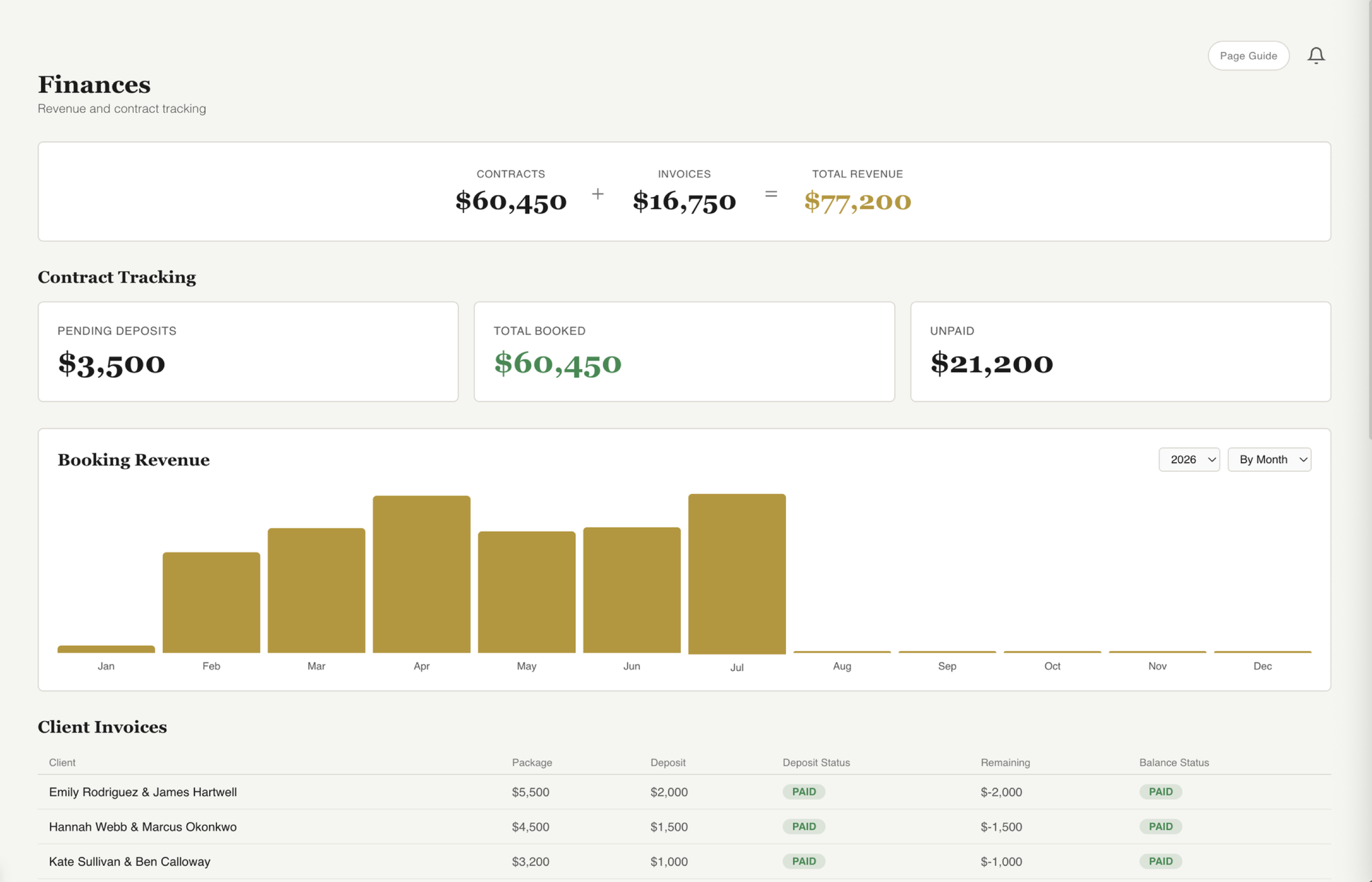
See how fstop's financial tracking works →
Who Should Switch to Fstop
Fstop is the right move if you're a photographer who:
- Is paying more than you'd like for HoneyBook and wants better value
- Is frustrated that your CRM doesn't understand photography workflows
- Wants a clean, focused tool without features you'll never use
- Cares about client experience and doesn't want third-party branding on your documents
- Shoots weddings, portraits, events, or any photography where client relationships are central
If you run a large studio with multiple employees who need advanced project management and accounting integrations, HoneyBook or a more enterprise-focused tool might serve you better. But for the solo or small-team photographer who wants a system that just works — Fstop is the answer.
How to Switch from HoneyBook to Fstop
Switching is simpler than you'd think. Here's how photographers typically do it:
- Start your free trial — 7 days, no commitment
- Set up your pipeline stages — Fstop's defaults already match photography workflows, so this takes minutes
- Import your client contacts — bring over your existing leads and clients
- Build your templates — create your first reply, follow-up, and proposal templates (Fstop has photography-specific starting points)
- Run both tools in parallel for one week — let any in-progress HoneyBook projects finish before canceling
Most photographers are fully set up and running in under a day. There's no lengthy onboarding, no mandatory training calls, no sales pressure. You create an account, connect your tools, and start using it.
Try Fstop for 7 days for 7 days.
The CRM built by a photographer, for photographers. Plans from $19.99/mo. See why photographers are making the switch.
START YOUR TRIAL