Here is an uncomfortable truth about photography bookings: most of the clients you lost this year did not choose someone else because of price. They chose someone else because that photographer followed up and you did not.
Clients are busy. They send an inquiry, get distracted by life, and then book the photographer who stayed in front of them. The one who sent a second message. The one whose name they still remembered three days later. That is the entire game.
Better follow-up is one of the highest-leverage things you can do for your business and it costs nothing but a little consistency.
Why Most Photographers Do Not Follow Up
It is not laziness. It is usually one of three things:
- They feel like it is pestering. They sent one email and assume the client will reply if they are interested. In reality, people need prompts. A follow-up is not annoying. It is helpful.
- They forget. With multiple inquiries coming in at different times, it is genuinely hard to remember who needs a nudge and when. Without a system, things slip.
- They do not know what to say. The first reply is easy. The follow-up feels awkward. So they skip it.
All three of these are solvable. The solution to forgetting is a pipeline that tracks every lead and flags the ones that have gone quiet. The solution to not knowing what to say is having a template ready. The solution to feeling like you are pestering is understanding that a well-written follow-up does not feel like a sales pitch. It feels like you care.
The Follow-Up Sequence That Actually Works
You do not need a complicated automation system. You need a simple, repeatable sequence that you run on every cold lead. Here is what works:
The 3-Touch Follow-Up Sequence
Initial Response: Send Within the Hour
Acknowledge their inquiry by name, mention their specific date or details, and express genuine interest. Keep it warm and human. End with a clear next step, usually a short call or a question that invites a reply. This is not the time to dump your full pricing. It is the time to start a conversation.
First Follow-Up: The Friendly Check-In
If you have not heard back, send a short, low-pressure message. Something like: "Hey [name], just wanted to make sure my last message came through. I would love to connect about your [date/event]. Let me know if you have any questions." That is it. No pitch. Just a human reaching out.
Second Follow-Up: Add a Reason to Respond
One more message, slightly different angle. Reference something specific: your availability around their date, a recent shoot you completed in their area, or a question about their vision. Give them a reason to open the email beyond "are you still interested?" Close the loop clearly: "If your plans have changed, no worries at all. I just want to make sure you have what you need."
Final Touch: Leave the Door Open
One last message that is purely gracious. "I will let you go after this one. I just wanted to say that if your timing changes or you need anything down the road, I am always happy to help." Then move the lead to a closed stage in your pipeline. No hard feelings. Some leads come back months later specifically because you handled the end of the conversation well.
What to Say (Without Sounding Desperate)
The tone of every follow-up matters as much as the timing. Here are the principles:
- Be specific, not generic. Reference their name, their date, their event. A message that clearly applies to them feels personal. A message that could have been sent to anyone feels like spam.
- Keep it short. Three to four sentences max. Clients are not going to read a paragraph if they did not respond to your first email. Get to the point, be warm, and stop.
- Give them an easy out. "If your plans have changed, no worries" is not weakness. It is respect for their time. It also removes the awkwardness that makes people avoid replying.
- Do not apologize for following up. "Sorry to bother you again" trains the client to see your message as an inconvenience. You are a professional following up on a business inquiry. That is completely normal.
The real stat: Studies across service industries consistently show that over 80% of sales require at least five touchpoints before closing. Most photographers send one. The gap between what photographers do and what it actually takes to book is enormous, and it is entirely closeable.
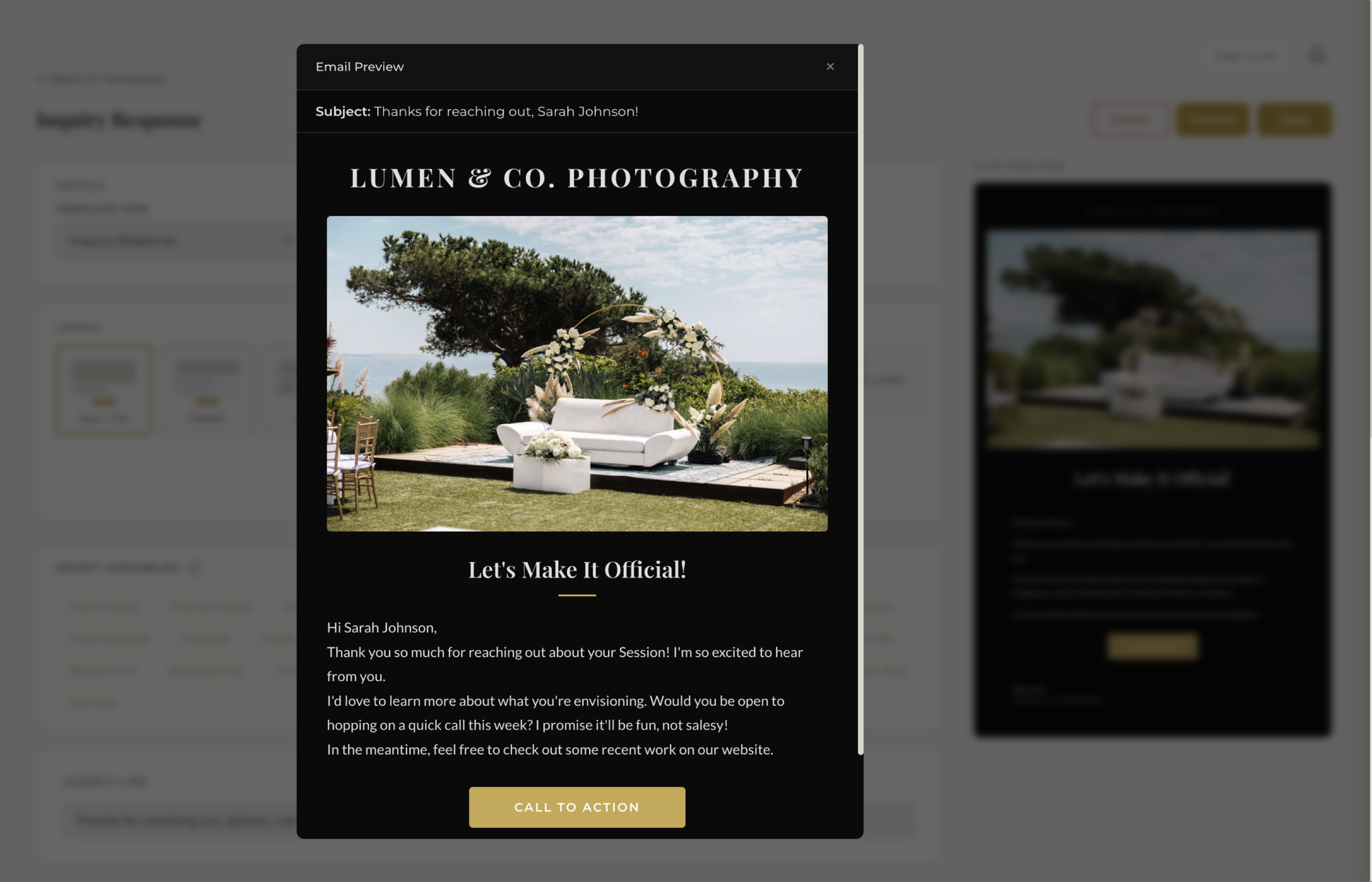
See how fstop's email templates work →
The Difference Between Persistence and Pestering
There is a clear line. Pestering is sending the same message repeatedly with no new value. Persistence is showing up consistently with something genuinely useful: a question, a resource, a relevant detail, a gracious close.
The sequence above crosses into pestering territory only if you ignore the signals. If a client replies and says they went in a different direction, close it out gracefully and move on. If they ask you to stop, stop immediately. The goal is to stay visible to leads who are still undecided, not to pressure people who have already decided.
Most clients who ghost you after an inquiry are not saying no. They are saying "I got busy." A well-timed follow-up catches them when they have a moment to actually respond.
How to Make This Automatic
The challenge with any follow-up system is remembering to run it. You have shoots to edit, clients to deliver to, and a business to manage. Tracking every lead manually is how follow-ups get skipped.
A CRM like Fstop solves this at the system level. Every inquiry lands in your pipeline automatically. You can see at a glance which leads have gone cold and how many days have passed since your last contact. Your follow-up templates are pre-written and ready to send with a few clicks, personalized with the client's name and details, but not written from scratch every time.
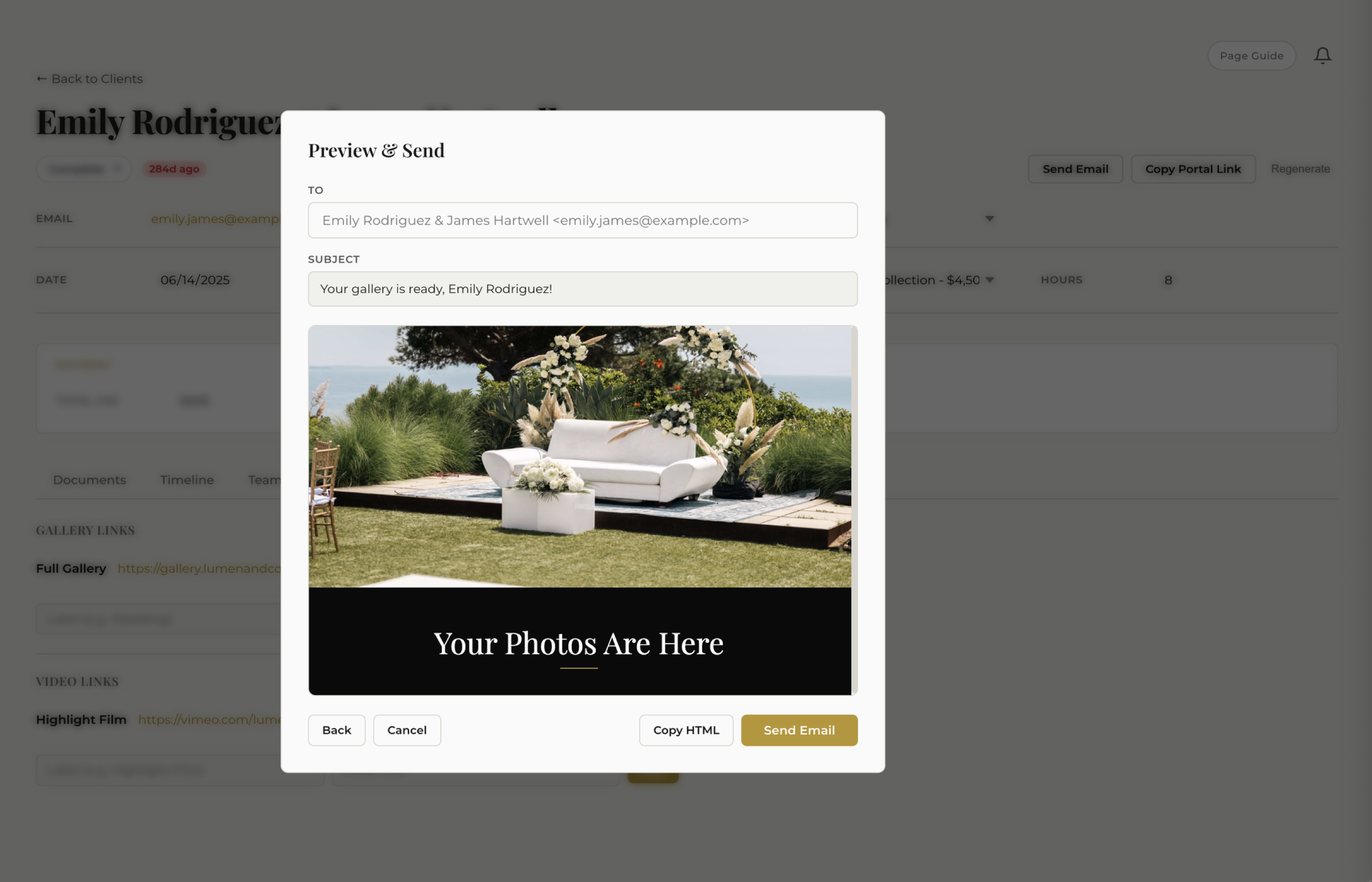
See how fstop's email sending works →
Instead of relying on memory or a spreadsheet, your pipeline does the tracking. You open it and it tells you exactly who needs a follow-up today. That is the difference between a follow-up system that actually runs and one that exists in theory but gets skipped when things get busy.
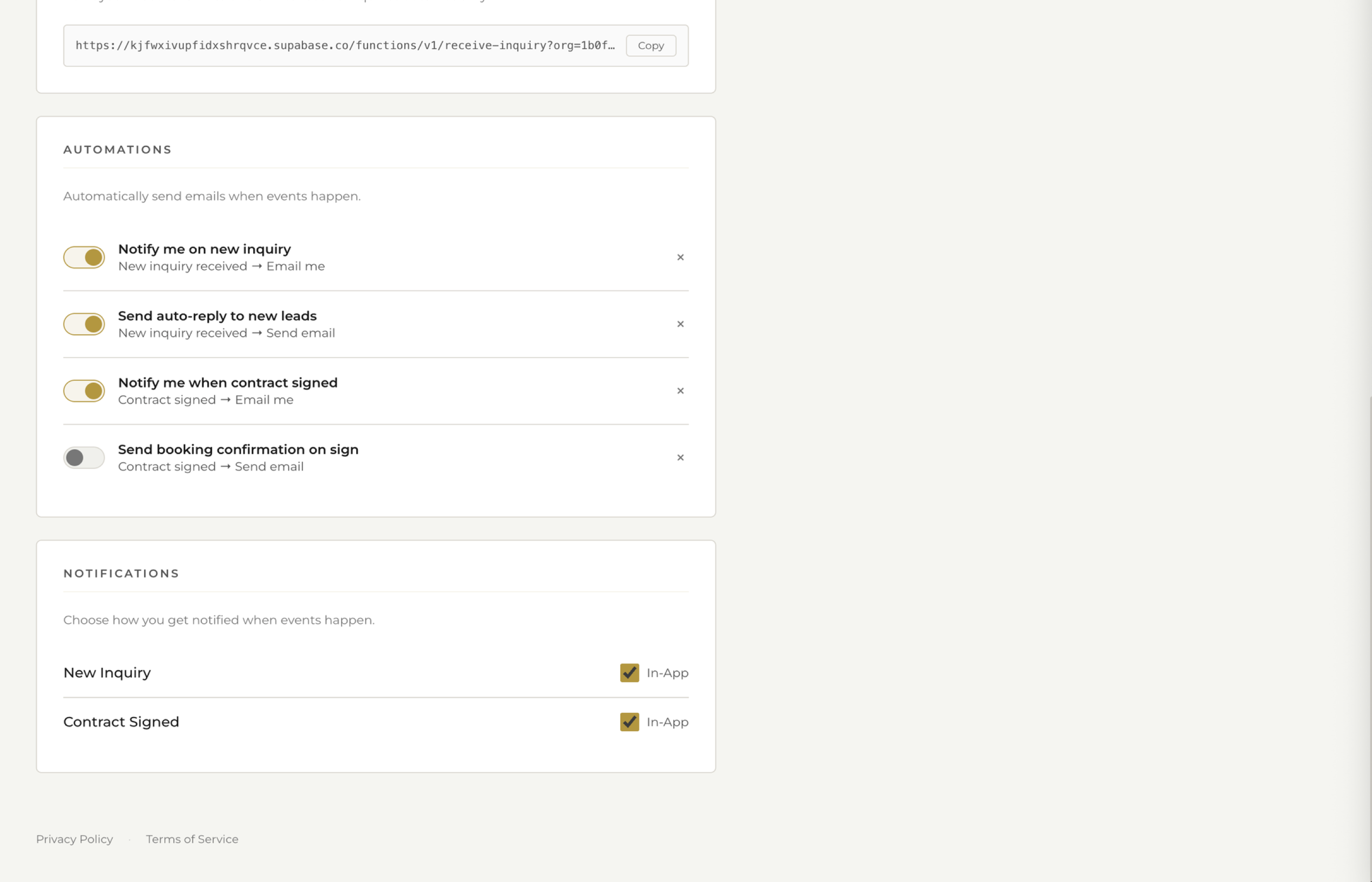
See how fstop's automations work →
Start Small
If you are not following up at all right now, do not try to build the perfect automated sequence on day one. Start with one change: whenever a lead goes quiet for three days, send one short check-in message. That is it. One message, three days, every cold lead.
Do that consistently for a month and notice how many conversations restart. How many bookings close that would have slipped away. Then layer in the full sequence from there.
The photographers who stay fully booked are not doing anything magical. They are just staying in the conversation a little longer than everyone else.
Never lose a lead to a missed follow-up again.
Fstop keeps your pipeline visible, your templates ready, and your follow-ups on track, so you can focus on shooting, not chasing.
Start Your Trial