
Pricing is one of the hardest parts of running a photography business. Charge too little and you burn out doing double the work for half the pay. Charge too much before you have the portfolio and systems to back it up, and you lose clients to competitors. Get it right, and you build a business that actually sustains you.
This guide breaks down what photographers are actually charging across different niches in 2026, how to calculate the right number for your market, and how to structure your packages so clients say yes.
Why Most Photographers Price Wrong
The most common mistake is basing your prices on what you think clients will pay, or copying what other photographers charge. Both approaches are backwards.
Your prices need to start with your cost of doing business. Add up everything it costs you to operate: gear, insurance, software, editing time, travel, marketing, and the value of your own time. Then figure out how many sessions or events you can realistically shoot per year. That math tells you your minimum viable price.
Quick formula: Annual income goal + annual business expenses, divided by the number of shoots you want per year = your minimum price per booking. Add your profit margin on top and that is your floor.
If the number feels high, the answer is not to lower it. The answer is to get better at communicating your value, improve your client experience, or work fewer, higher-paying jobs.
Photography Pricing by Niche in 2026
Rates vary significantly across photography specialties. Here is a realistic look at what photographers are charging at different experience levels:
Wedding Photography
| Experience Level | Typical Range | What's Usually Included |
|---|---|---|
| New (0-2 years) | $1,000 - $2,500 | 6 hours, online gallery |
| Emerging (2-4 years) | $2,500 - $4,500 | 8 hours, second shooter option |
| Established (4-7 years) | $4,500 - $8,000 | Full day, second shooter, engagement session |
| Premium (7+ years) | $8,000 - $20,000+ | Full experience, album, priority delivery |
Portrait Photography
| Session Type | Typical Range | Notes |
|---|---|---|
| Family / Lifestyle | $200 - $800 | 1-2 hours, 30-60 edited images |
| Headshots / Corporate | $250 - $1,200 | Fast turnaround, commercial usage |
| Boudoir | $400 - $2,000+ | Includes hair/makeup coordination, luxury experience |
| Newborn / Maternity | $300 - $1,000 | Specialized setup, props, editing |
Event Photography
| Event Type | Typical Range | Notes |
|---|---|---|
| Corporate / Brand | $150 - $400/hr | Fast turnaround, usage rights |
| Conferences / Galas | $800 - $3,000 | Half or full day rates |
| Real Estate | $150 - $500 | Per property, fast delivery |
How Your Market Affects What You Can Charge
Location changes everything. The same portfolio commands very different rates depending on where you are shooting:
| Market | Pricing Multiplier | Example |
|---|---|---|
| NYC, LA, SF, Miami | 1.5x - 2x national avg | Wedding starting at $4,000+ |
| Major metros | 1.0x - 1.3x | Wedding starting at $2,500+ |
| Mid-size cities | 0.8x - 1.0x | Wedding starting at $1,800+ |
| Smaller markets | 0.6x - 0.8x | Wedding starting at $1,200+ |
If you are in a smaller market but want to charge more, the path is specialization. Photographers who focus on a specific niche (South Asian weddings, luxury elopements, high-end corporate clients) can charge significantly above their local market average because they are not competing on geography anymore.
How to Structure Your Packages
How you present your pricing is just as important as the numbers themselves. A few principles that work:
Three Tiers, Not a Menu
Give clients three options. Three tiers create a natural anchor effect where most people choose the middle. A long list of add-ons creates decision fatigue and slows down the booking.
- Essential: Your entry-level offering. Covers the basics, appeals to budget-conscious clients.
- Signature (most popular): Price this at the number you actually want to earn. Make it feel like the obvious choice.
- Premium: Your full experience. Higher margin, fewer clients, but worth offering for those who want everything.
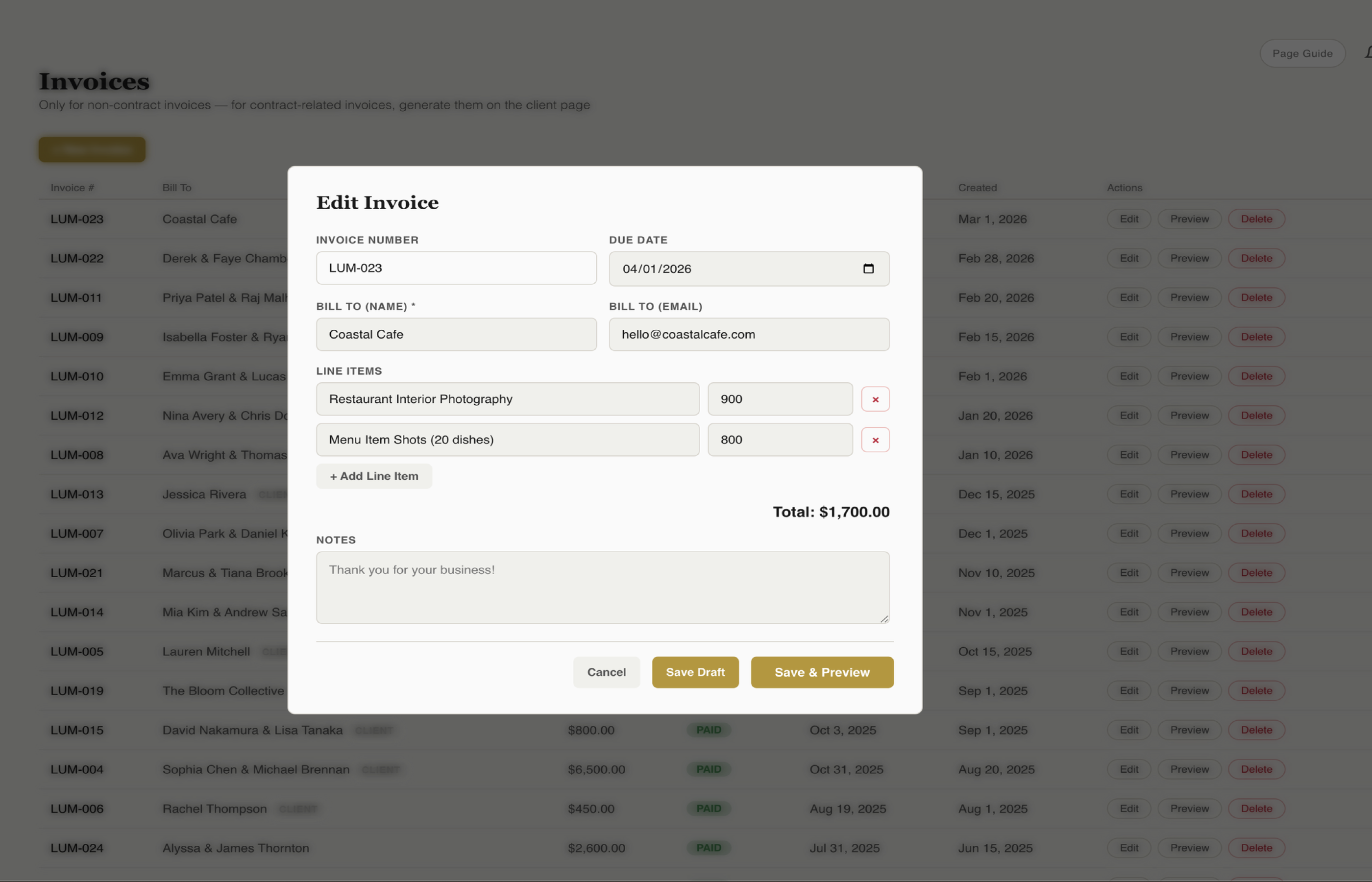
See how fstop's invoice editor works →
When to Raise Your Prices
You are priced too low if any of these are true:
- You are booking more than 70% of your inquiries
- Clients almost never push back on price
- You have a waitlist or are turning away work
- Your portfolio has improved significantly since you last updated your rates
- You are exhausted and not making enough to justify it
Raise prices with each new booking season. Even 10-15% per year compounds quickly and gradually moves you up-market without shocking anyone.
Communicating Your Pricing With Confidence
How you present your pricing matters as much as the number. A few things that move the needle:
- Send a polished proposal, not a plain email. When your pricing looks professional and branded, clients perceive higher value before they even read the numbers.
- Lead with value, not price. Walk clients through what they are getting and why it matters before you show the number.
- Do not apologize for your rates. Confidence signals quality. Photographers who hedge or offer unsolicited discounts undermine their own positioning.
- On discounts: If a client asks for a discount, adjust the package instead of lowering the price. Remove something rather than giving money away.
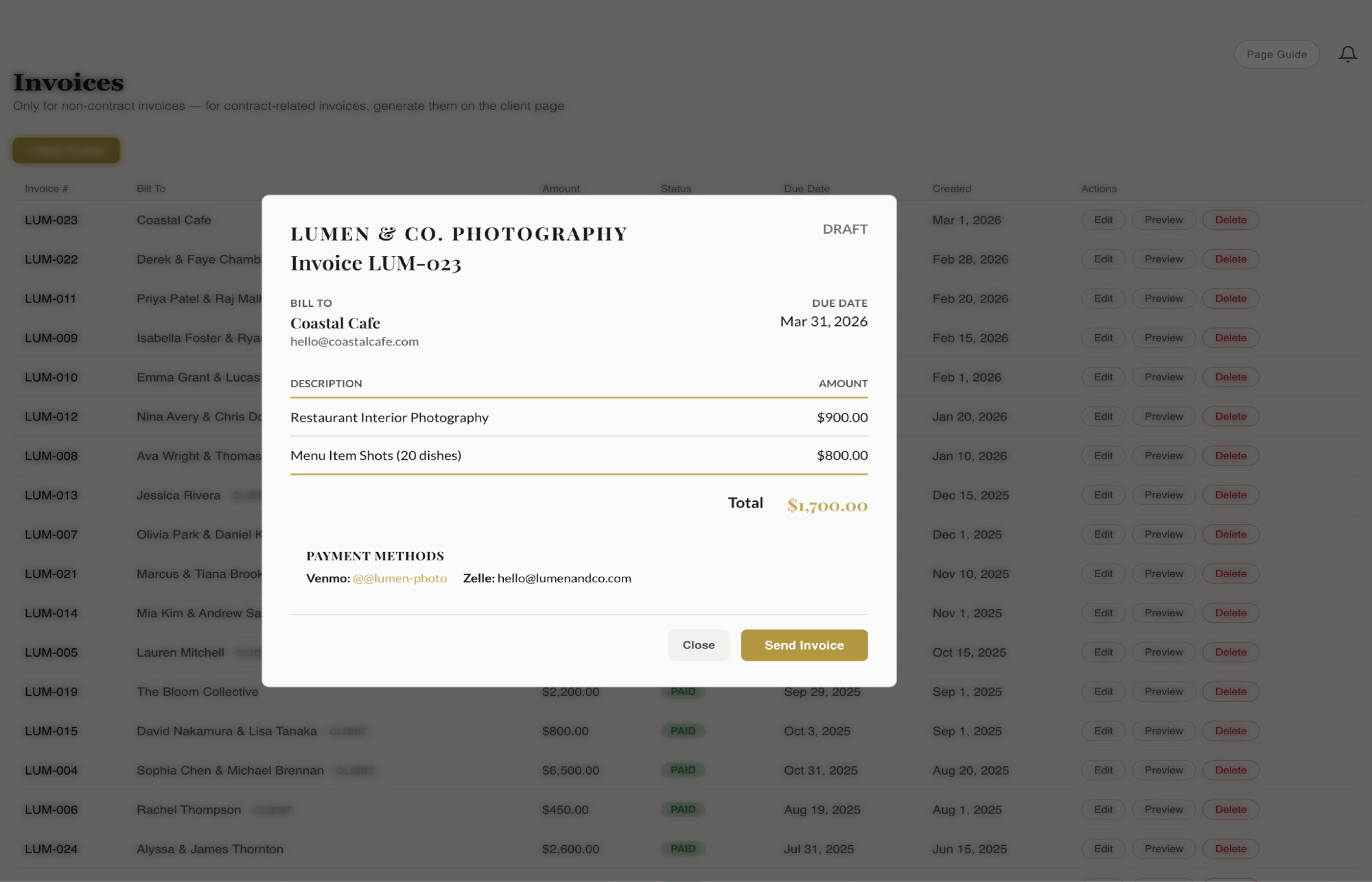
See how fstop's polished invoices look →
Track Your Numbers to Make Smarter Decisions
Pricing should not be a gut feeling. It should be based on data. How many inquiries are you getting? What percentage are converting? What is your average booking value? How does conversion change when you adjust your packages?
Without a system to track this, you are guessing. A CRM like Fstop gives you a full pipeline view of every inquiry, where each lead stands, and what it is worth. Over time, that data tells you exactly when to raise your prices and which packages are converting best, so every pricing decision you make is backed by your own numbers.
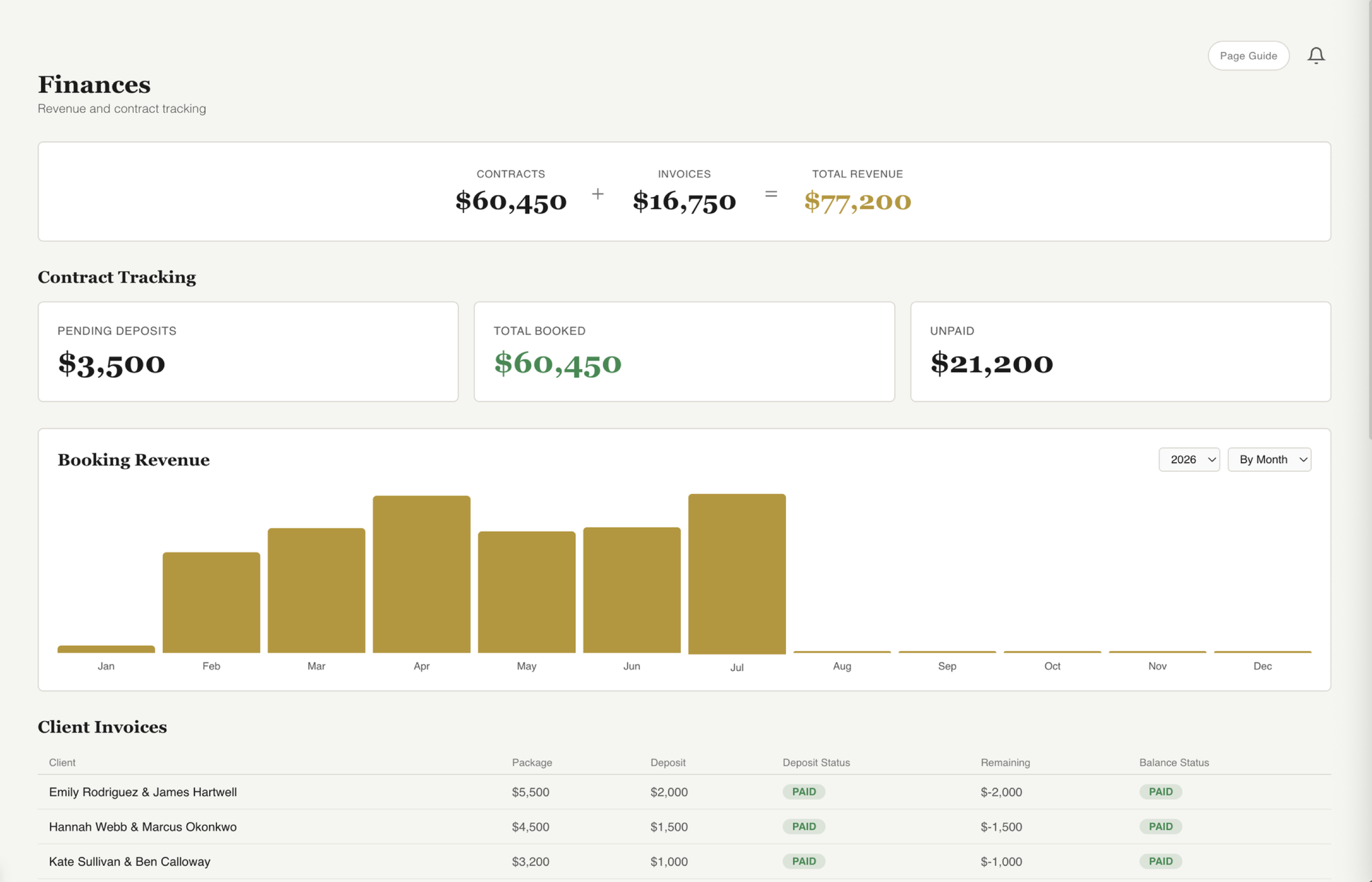
See how fstop's financial dashboard works →
Price like a business. Run like one too.
Fstop gives you a full inquiry pipeline, branded proposals, and the data to know when it is time to raise your rates. Try it free for 7 days.
Start Your Trial